
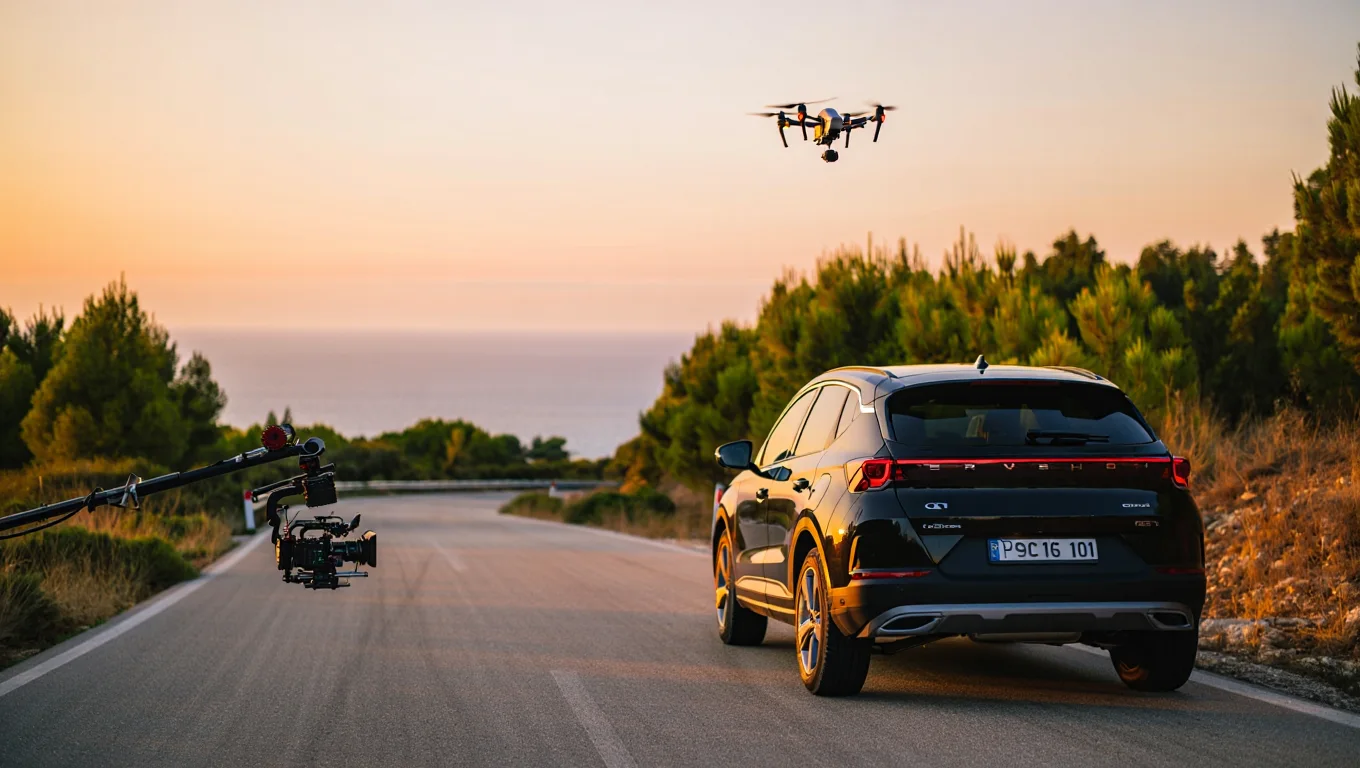
Automotive events are unlike other corporate filming because the product moves, reflects everything around it, and looks completely different depending on the light. A launch film that treats a car like a conference backdrop wastes the most photogenic asset in the room.
The events we film
- Model launches — the reveal, the walk-around detail, and the first genuine reactions.
- Track and driving days — motion, sound, and the footage that actually sells a car.
- Dealer openings — showroom, staff and the sense of a business worth visiting.
- Owner and club events — community content, which performs unusually well socially because the audience is already invested.
Why cars are difficult to film well
Paint is a mirror
Every light source, every person and every ceiling tile shows up on the bodywork. It is the single reason amateur car footage looks cluttered without the viewer being able to say why — they are seeing the room reflected back at them instead of the car.
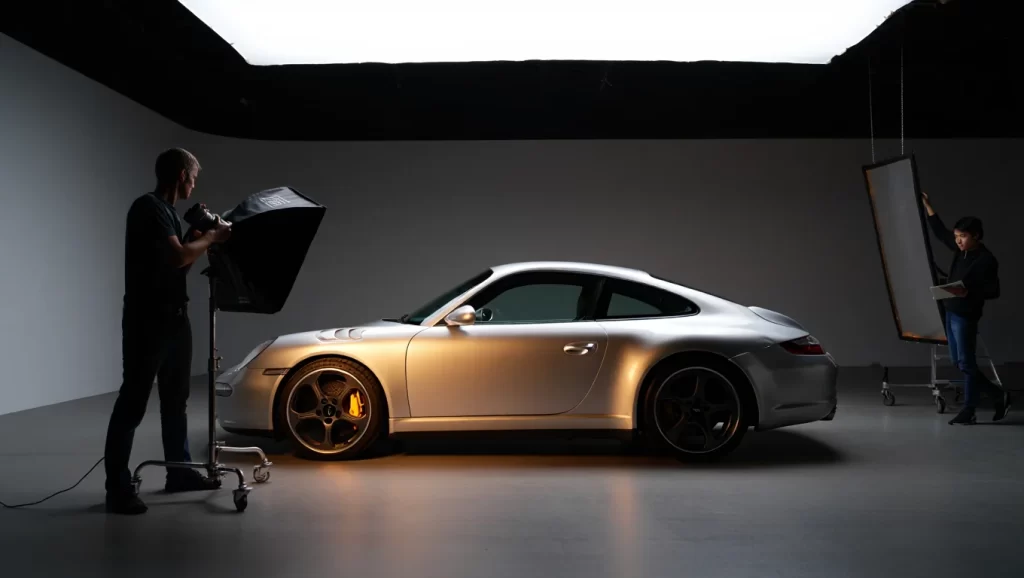
Controlling that means controlling camera position first and lighting second. On a showroom floor it often means shooting from angles that keep the overhead lights off the bonnet, or filming a panel at a time rather than trying to make the whole car work in one wide shot. Dark cars are hardest; a black car under a lighting rig will show every fixture in the ceiling unless the angle is chosen deliberately.
Light changes the car completely
The same vehicle reads as aggressive at dusk and neutral under midday sun. Low, raking light picks out the body lines a designer spent years on; overhead sun flattens them entirely and blows out the highlights along the shoulder.
On an outdoor event this should shape the schedule. If the reveal is at noon for guest convenience, the hero footage still wants to happen closer to golden hour — even if that means filming the car separately from the event itself. That is a conversation worth having weeks before, not on the morning.
Rolling footage changes everything
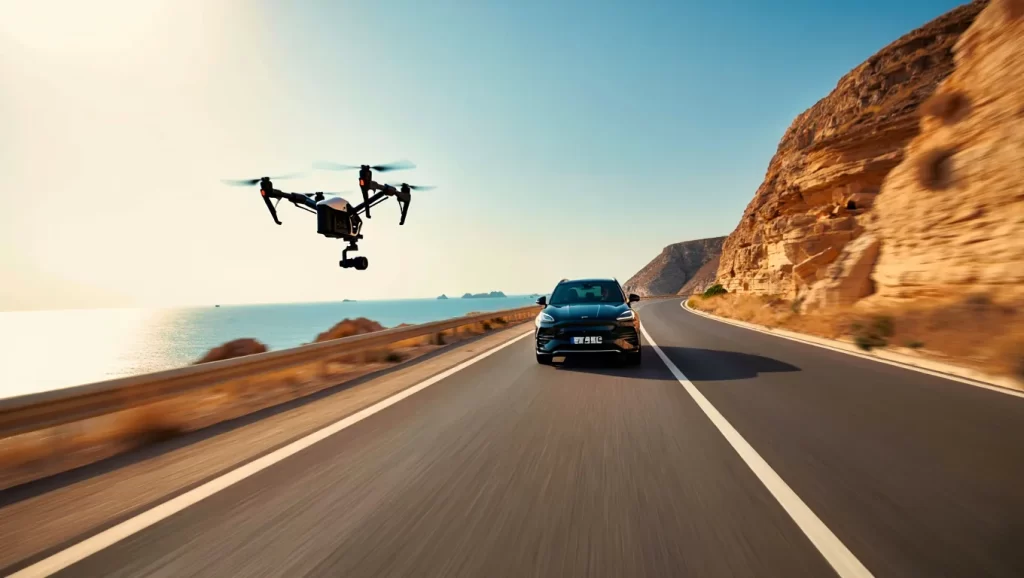
A static car is a photograph. A moving one is a film. Tracking alongside, following through corners, or aerial work on an open road is what separates a launch film from event documentation.
It needs planning that most event briefs do not include. A closed section of road or a private circuit. A tracking vehicle with a stable mount. A driver who can repeat a line consistently, because the shot will be run several times. And where aerial is involved, a certified operator flying legally — see drone filming in Cyprus for what to ask.
Cyprus’s coast roads are genuinely well suited to this, which is part of why so much automotive content gets shot here. The combination of sea backdrop, consistent light and quiet stretches outside peak season is difficult to find in most of Europe.
Sound is half of it
Engine sound is a major part of what sells a performance car, and it cannot be recovered afterwards. Capturing it properly means recording separately from the camera — static microphones as the car passes, and where possible onboard recordings — rather than relying on whatever the camera picked up from fifty metres away.
For electric vehicles the problem inverts: there is no engine note, so the sound design carries the film instead. That is a post-production decision that should be made before the shoot, because it changes what needs recording on the day.
Same-day social cuts
Automotive audiences are online and immediate. A short vertical cut published while the event is still running does more for reach than a polished film a fortnight later.
Where the schedule allows we plan for an on-site edit, which means bringing the hardware and building in an hour where an editor is not also filming. The full film follows afterwards. Deciding this in advance matters, because a same-day cut needs footage delivered to the editor throughout the day rather than at the end of it.
Stills alongside the film
Press coverage needs photographs, and capturing them on the same day is markedly cheaper than a separate shoot. The cars are clean, the venue is dressed and the light has already been assessed. See our photography work, and car photo and video shoots for the studio side.
Planning a launch
Four answers shape the entire shoot: when the reveal moment happens, whether the cars can be driven, whether any road or track access is available, and when the press deadline falls. Bring those to the first conversation and the rest follows quickly.
See our event video production page for how we cover live events generally, and the guide to video production in Cyprus for how projects are planned and priced.
Talk to us about your project
Every project is quoted before you commit, and we reply within 24 hours. See our videography work, browse the photography side, or tell us what you need.


