
Commercial drone filming in Cyprus is regulated, and responsibility for compliance sits with the operator rather than the client — but a client who commissions an unlicensed flight still carries the reputational risk. This is a plain-language guide to how it works and what to ask.
This article describes the general framework. Regulation changes, and national implementation carries detail this cannot cover. Always confirm current requirements with the Cyprus Department of Civil Aviation before flying.
The framework
Cyprus is an EU member state and applies the European drone regulations, which replaced the patchwork of national rules that existed previously. The practical effect is that the same structure applies across the EU, so an operator familiar with the rules in one member state will recognise them here.
Operations are grouped into three categories by risk. The Open category covers lower-risk flights and carries the lightest requirements. The Specific category covers operations exceeding those limits and requires authorisation based on a risk assessment. The Certified category covers the highest-risk operations and is not relevant to commercial filming.
Most commercial filming sits in the Open category. More demanding work — flying closer to uninvolved people, or beyond standard limitations — moves into Specific, which takes longer to arrange and should be raised at the briefing stage rather than the week before.
What an operator must have
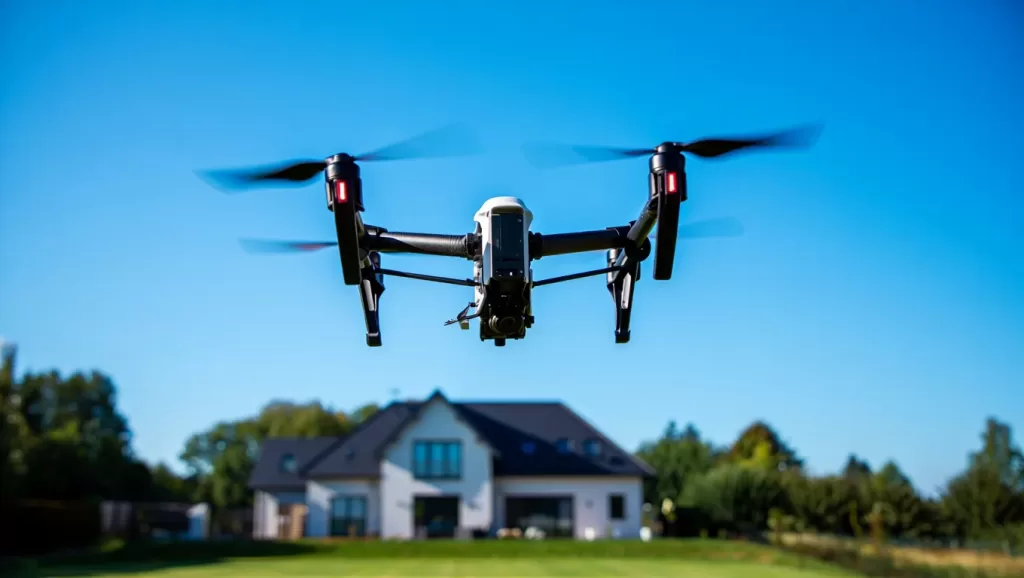
At minimum, a professional operator should be registered as a drone operator, hold remote pilot competency appropriate to the category of the flight, and carry insurance that explicitly covers drone operations. Registration numbers must be displayed on the aircraft.
Certain locations need additional permission regardless of category — private property, some heritage sites, and controlled areas among them. That permission is usually the production’s job to obtain, not the pilot’s, so agree who is doing it.
Where you cannot fly
Restrictions apply around airports and airfields, military installations, and certain protected or densely populated areas. Cyprus has particular sensitivities given its airspace, so it must be checked for each specific site rather than assumed from a previous shoot nearby.
The practical consequence for a production is that location scouting must include an airspace check. Two properties a few streets apart can have entirely different restrictions, and discovering that on the day is an expensive way to learn it.
The five questions to ask before booking
- Are you registered as a drone operator?
- What remote pilot competency does the pilot hold, and for which category?
- Does your insurance explicitly cover drone operations?
- Have you checked the airspace for this specific location?
- Who obtains any site-specific permission that is needed?
These are reasonable questions and a professional operator will welcome them. Hesitation on any of the five is worth taking seriously — not because the footage will be worse, but because the liability lands somewhere.
Why compliance produces better footage
Compliance is not only a legal matter. An operator working within the rules plans the flight, checks the site, and knows what is achievable before the day — which is also exactly what produces usable footage rather than a scramble.
The property film below is a fair example of aerial doing the job it should: establishing the setting and the scale of the plot in a way no ground camera could.
See how aerial fits into property filming, automotive work, and the wider guide to video production in Cyprus.
Talk to us about your project
Every project is quoted before you commit, and we reply within 24 hours. See our videography work, browse the photography side, or tell us what you need.