
If you want to sell products, no doubt videos and photos must be part of your content strategy and while many entrepreneurs take amazing photos and videos of their products, they often do so copying trends they see online.
But I can tell you, there is a simple formula you can follow that creates all the images or videos you need to sell your product’s? This is the guide to the three shots that sell everything.
Buying Psychology in Videography
When someone makes a buying decision, they need five decision drivers that lead them to a purchase, a Problem they feel, a future they want, trust that it will work, safety from regret and a trigger that says now.
- The Problem: They need to feel a pain like something is not how they want it to be in their life and they need to fix it. This can be a discomfort, a fear or a desire.
- A Clear Future: They need to see and feel how their future will look so they can imagine and process it.
- Trust that It will work: They need to feel secure, that what you offer them works how they expect it to work. The brain asks: Will this work? Will I look silly in this hat? Will I regret this decision?
- Safety from Regret: People fear that they will spend their hard earned money, and then regret the decision. And they usually look for some kind of guarantee that makes them feel safe. Guarantees however dont have to be a return policy, they can be an experience from another buyer.
- The Trigger: If all the previous points have been checked, only then are they ready for the trigger, the signal that tells them its time to buy this now. This is also knows as the CTA or Call to Action which is often used incorrectly.
So now that we know from a psychological standpoint what we need to make a buying decision, lets look at it from a marketing videography standpoint.
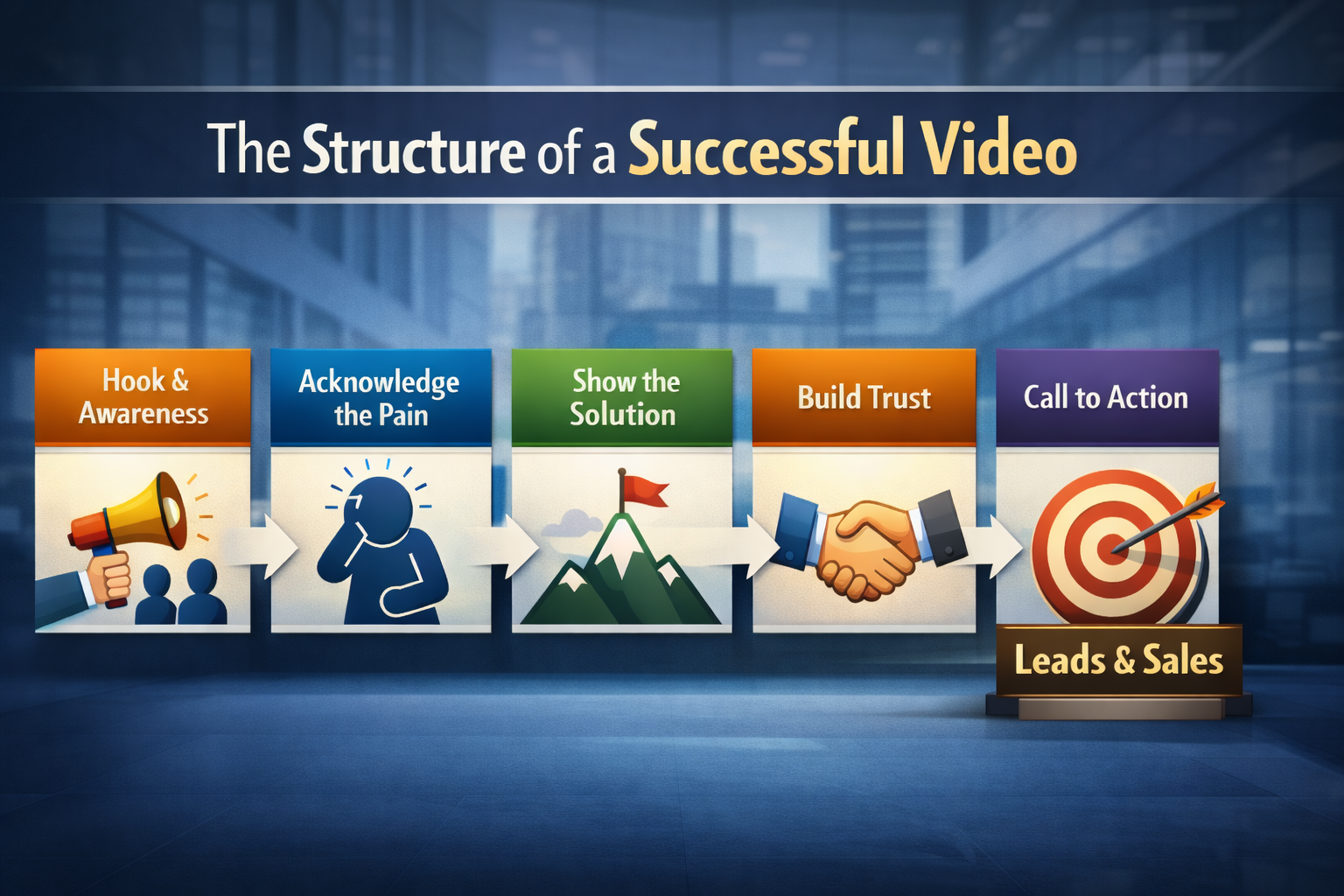
The Marketing Video Structure for Selling
Now that we know the five decision drivers in psychology, we can apply these to creative videography. Now, I want to be very clear on a point I have learned from my many years as a sales & marketing director, Dont try to sell something your product is not.
Using psychology to sell something, is a great tool it almost feels like a cheat code, but a successful sale is only successful if the client is happy, doesnt return your product and doesn’t leave a bad review. While you can guide them with your marketing video to buy your product or services, you cannot stop them from trying to return it, get a refund or even worse, leave a bad review about your business.
So let’s look at the videography structure that sells everything.
Soothing the Pain
Growing up in the 80s and 90s, advertising was much more basic than it is in todays standards. Social media has driven marketing to be super over optimised to fit in short attention spans of todays viewers. But as basic as ad’s where (obviously not all of them) they got one thing right, showing or visualising the pain. Tv ad’s would traditionally start by showing someone having a hard time with something, they had angry or upset expressions, they often went through absurd accidents and were generally not happy in the first scene.
Marketeers knew from early on, that they needed their product to be relatable to the consumers Pain. These shots had a dual purpose, they would be an immediate hook for the viewer and, they would make the viewer feel familiar to the pain.
Today, ads are way more focused but often still structured in the same way. If you scroll through youtube, you will see tons of ads that start with the pain. I remember seeing one just a couple of days ago, where a “sleezy” marketing consultant made sarcastic comments about how easy marketing is. If you ever tried to setup a successful google campaign, you will know it’s not.
So by creatively addressing and facing the consumers pain, we can create a strong hook and build the first step to connect with your audience.

The Future they Want
Now that the viewer knows we understand them and we know their pain point, its time to show them what their future could really look like. And while I dont want to continue to use the 80s and 90s example, they are such beautiful examples because they are raw and direct and easy to see through (now that we know).
The Immediate scenes that followed the pain point, would show the actors happy and content an over exaggerated almost unachievable level of happiness. It showed the viewer, the future they want.
In today’s marketing videography, the hints are more focused and more refined. A solved problem would translate directly on to some kind of benefit.
If you have spent any time recently on the internet, you will no doubt have seen the Hexclad Frying Pan ads. The ads start by showing a destroyed and bad quality frying pan, and the narrator directly tells you: If you want something cheap that doesn’t last, don’t buy HexClad. Who cannot relate to a crusty old pan that you cannot clean? They then directly show you a perfectly seared steak and I for one know, I want a perfectly seared steak. They have successfully shown me, the future I want. And on the way there, they have also positioned their brand as high quality and expensive.
Time to build Trust
Our viewers now know that we understand their problem, and we know what future they want. We have shown them in very convincing images but unless you are a well known brand that has spent years and years on the market and spent tons of money on marketing, you have not yet earned their trust. And the truth of the matter is No Trust… No Buyer.
So how do we build trust in a few seconds of video? The answer is, it depends. Each product or service is different, different products or services require different levels of trust. An airliner for example requires more trust than buying a kitchen knife, the stakes are significantly higher. Different products or services can also demonstrate Trust in different ways. A factory selling B2B products can demonstrate trust by showcasing a professional process and high quality materials.
Determine what your buyers consider “trust” and build a narrative around it. Honesty and consistent messaging also creates longterm brand trust.
Get the Leads (CTA)
You hear it over and over again, add your Call to Action. On websites, youtube videos, flyers etc. And while CTA’s are important, they are virtually useless without the previous steps. If a client doesn’t know your product or trust it, you can plaster CTA’s all over the place and no one will contact you.
Imagine buying intent like a rubber band, at first, there’s no tension and no reason to act. But every touchpoint stretches it a little: awareness, curiosity, desire, urgency.
Stretch it too little, and nothing happens. Stretch it too far, and it snaps they disengage.
But stretch it just right, and eventually the release is inevitable. They buy. This is where you Insert your CTA.